It sure is convenient that all these songs that ostensibly weren’t written in English all rhyme when translated into English, isn’t it, Mr. Tolkien?
yknow what really bothered me for some reason?? he used ‘loud as a train’ or smth similar to describe the balrog’s roar. like, no ok so y’know if this is supposed to have been ‘translated’ like you tell us, then wouldn’t it have been smth other than a train, like a waterfall? idk it just really bothers me
Clearly he was talking about the train of Glorfindel’s robes which as everyone knows are covered in bells and jingle
1. I mean, he invented the languages he was going to translate, so if a rhyme didn’t work he could change the whole language if he wanted to. But actually, it’s not uncommon for translations (particularly older translations) to try to preserve or at least recreate rhyme schemes. For example, Tolkien translated “Pearl” into rhyming Modern English.
2. The train thing! It’s actually related to how Tolkien presents the hobbits as essentially “modern” characters who then go out and have adventures in the old heroic culture of myth and legend. As Tolkien says, “[The Shire] is in fact more or less a Warwickshire village of about the period of the Diamond Jubilee…” (Letters, 230, #178). It’s very deliberately a part of the language. Think of all the modern, non-medieval things the hobbits have. It’s always a contrast between Modern English (Shire) and Old English (rest of Middle Earth). Even though Tolkien changed some foreign names to make them seem English, the hobbits still have
tobacco (pipeweed), a New World crop
drink tea in the modern English way
potatoes, another New World crop, made more English-sounding as “taters”
rabbits/coneys, which were imported to England in the 13th century
a regular postal service
mantelpiece clocks!
It was a deliberate choice that gave readers us a group of characters who can serve as tour guides to a mythical medieval adventure. Tom Shippey explains it better than I ever could:
…There is one very evident obstacle to recreating the ancient world
of heroic legend for modern readers, and that lies in the nature of
heroes. These are not acceptable any more, and tend very strongly to be
treated with irony: the modern view of Beowulf is John Gardner’s novel Grendel (1971). Tolkien did not want to be ironic about heroes, and yet he
could not eliminate modern reactions. His response to the difficulty is
Bilbo Baggins, the hobbit, the anachronism, a character whose initial
role at least is very strongly that of mediator. He represents and often
voices modern opinions, modern incapacities: he has no impulses towards
revenge or self-conscious heroism, cannot ‘hoot twice like a barn-owl
and once like a screech-owl’ as the dwarves suggest, knows almost
nothing about Wilderland and cannot even skin a rabbit, being used to
having his meat ‘delivered by the butcher ready to cook’. Yet he has a
place in the ancient world too, and there is a hint that (just like us)
all his efforts cannot keep him entirely separate from the past.
…
Bilbo’s behaviour is solidly anachronistic, for he is wearing a jacket, relying on a written contract, drawing a careful distinction between gain and profit, and proposing a compromise which would see Bard’s claim as running expenses (almost tax deductible). Where Bard and Thorin used archaic words (‘Hail!’, ‘foes’, ‘hoard’, ‘kindred’, ‘slain’), he uses modern ones: ‘profit’, never used in English until 1604, and then only in Aberdeen; ‘deduct’, recorded in 1524 but then indistinguishable from ‘subtract’ and not given its commercial sense till much later; ‘total’, not used as here till 1557; ‘claim’, ‘interest’, ‘affair’, ‘matter’, all French or Latin imports not adopted fully into English till well after the Norman Conquest. It is fair to say that no character from epic or saga could even begin to think or talk like Bilbo.
Basically, if Tolkien does a thing with words, there’s always a very good chance that the professor was having fun with language, and doing it very consciously (see: Mount Doom, name of).
This might be my favorite Tolkien thing right after how he worked his hatred of Shakespeare into The Lord of the Rings.
Wait, wait. That’s a thing too?
Oh yeah. The reason we have Ents and the reason Eowyn kills the head Nazgul is because Tolkien felt Shakespeare cheated in Macbeth. (Tolkien also thought Shakespeare was generally over studied and represented in literature classes but that’s because Tolkien thought literature classes shouldn’t focus on much past The Canterbury Tales).
Anyway Tolkien felt cheated that the whole forest marching thing from the witches prophecy ended up just being dudes with branches glued to their arms so he created actual trees that would march on and destroy a stronghold. Also he felt the obvious solution to the ‘no man born of woman can kill Macbeth’ deal was to have a woman do it, not split hairs over whether a female corpse is still a woman or if a c-section counts as being born. So he has an unkillable foe who “no man” can kill and has a woman (and a hobbit) be the one to face it.
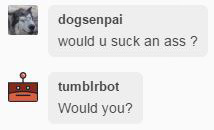
My fiancé’s dad is Arabic, has a really thick accent and doesn’t really understand cursing so when he gets road rage he just puts a bunch of curse words together. My favorite so far “Up shut your ass, motherbitch.”
Hello! I am going to answer your question, and then I am going to talk a little bit about GENDER IN COMEDY, because this is my tumblr and I can talk about whatever I want!
The vast vast vast majority of the animal jokes on BoJack Horseman (specifically the visual gags) come from our brilliant supervising director Mike Hollingsworth (stufffedanimals on tumblr) and his team. Occasionally, we’ll write a joke like that into the script but I can promise you that your top ten favorite animal gags of the season came from the art and animation side of the show, not the writers room. Usually it happens more the second way you described— to take a couple examples from season 2, “Okay, we need to fill this hospital waiting room, what kind of animals would be in here?” or “Okay, we need some extras for this studio backlot, what would they be wearing?”
I don’t know for sure, but I would guess that the croc wearing crocs came from our head designer lisahanawalt. Lisa is in charge of all the character designs, so most of the clothing you see on the show comes straight from her brain. (One of the many things I love about working with Lisa is that T-Shirts With Dumb Things Written On Them sits squarely in the center of our Venn diagram of interests.)
NOW, it struck me that you referred to the craft services crocodile as a “he” in your question. The character, voiced by kulap Vilaysack, is a woman.
It’s possible that that was just a typo on your part, but I’m going to assume that it wasn’t because it helps me pivot into something I’ve been thinking about a lot over the last year, which is the tendency for comedy writers, and audiences, and writers, and audiences (because it’s a cycle) to view comedy characters as inherently male, unless there is something specifically female about them. (I would guess this is mostly a problem for male comedy writers and audiences, but not exclusively.)
Here’s an example from my own life: In one of the episodes from the first season (I think it’s 109), our storyboard artists drew a gag where a big droopy dog is standing on a street corner next to a businessman and the wind from a passing car blows the dog’s tongue and slobber onto the man’s face. When Lisa designed the characters she made both the dog and the businessperson women.
My first gut reaction to the designs was, “This feels weird.” I said to Lisa, “I feel like these characters should be guys.” She said, “Why?” I thought about it for a little bit, realized I didn’t have a good reason, and went back to her and said, “You’re right, let’s make them ladies.”
I am embarrassed to admit this conversation has happened between Lisa and me multiple times, about multiple characters.
The thinking comes from a place that the cleanest version of a joke has as few pieces as possible. For the dog joke, you have the thing where the tongue slobbers all over the businessperson, but if you also have a thing where both of them ladies, then that’s an additional thing and it muddies up the joke. The audience will think, “Why are those characters female? Is that part of the joke?” The underlying assumption there is that the default mode for any character is male, so to make the characters female is an additional detail on top of that. In case I’m not being a hundred percent clear, this thinking is stupid and wrong and self-perpetuating unless you actively work against it, and I’m proud to say I mostly don’t think this way anymore. Sometimes I still do, because this kind of stuff is baked into us by years of consuming media, but usually I’m able (with some help) to take a step back and not think this way, and one of the things I love about working with Lisa is she challenges these instincts in me.
I feel like I can confidently say that this isn’t just a me problem though— this kind of thing is everywhere. The LEGO Movie was my favorite movie of 2014, but it strikes me that the main character was male, because I feel like in our current culture, he HAD to be. The whole point of Emmett is that he’s the most boring average person in the world. It’s impossible to imagine a female character playing that role, because according to our pop culture, if she’s female she’s already SOMEthing, because she’s not male. The baseline is male. The average person is male.
You can see this all over but it’s weirdly prevalent in children’s entertainment. Why are almost all of the muppets dudes, except for Miss Piggy, who’s a parody of femininity? Why do all of the Despicable Me minions, genderless blobs, have boy names? I love the story (which I read on Wikipedia) that when the director of The Brave Little Toaster cast a woman to play the toaster, one of the guys on the crew was so mad he stormed out of the room. Because he thought the toaster was a man. A TOASTER. The character is a toaster.
I try to think about that when writing new characters— is there anything inherently gendered about what this character is doing? Or is it a toaster?
More “wtf are humans, please leave the rest of us be” stuff:
Human reactions to fear!
No, I’m not talking about screaming or freezing in one spot and pissing yourself. I’m talking about the weirder, more specific-to-only-humans fear reactions.
Like singing.
Idk how many of you have watched people play horror video games, but a surprising amount of people start narrating what’s going on in a sing-song voice.
Imagine being an alien, walking in a horrific, dark tunnel with these weird gangly creatures, you’re all scared out of your wits and then one of them starts fucking singing.
In a dark cave. While everyone’s terrified.
“ ♫ ~We are all gonna fucking die, this is terrible and I wanna go hooooome~ ♬ ”
It used to bother me a little that Star Wars characters talked as if the Empire had been around forever (”before the dark times”, Obi-Wan says, exhausted) when the prequels tell us it’s only been about twenty years.
But since the inauguration, I get it.
Also, it’s been just over a month since the inauguration, and for Obi-Wan Kenobi it’s been around 228 months. No wonder the guy looks so fucking old.
Darth Vader: (On Twitter) Obi Wan is trying to spread lies and claim I am a “Master of Evil” and “More Machine than man”. Sad! Very dishonest Jedi living on a Terrible Sand Planet!
my favorite thing is when people from your high school who got married at 20 and have three kids at 22 post shit like “living with your significant other isn’t all fun it’s constant fighting and discomfort and never being happy! constant misery is natural and expected don’t get your hopes up! buy these pyramid scheme beauty products btw”



 callanswall