

Author: Goldpanner
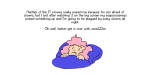

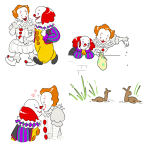
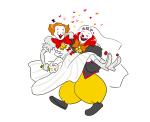

My housemates and I went to see IT at the cinema last night and I was sure that even though I wasn’t super scared while watching the movie I’d end up having nightmares.
Instead I dreamt about 1990 and 2017 IT meeting at a cafe in Paris, flirting and ending up married. I suppose my subconsciousness just thought they were cute?
Either way, it’s still a good and very pretty movie, so I’d definitely recommend it.
I think there’s a perception that the male gaze is necessarily sexual and that’s imo out of line w its original theoretical basis and with reality. I think the presence of gay men as cultural and aesthetic curators who decide what is artistically beautiful and worthy of praise in womanhood is an expression of misogyny that comes from basically the same place as ‘she should have big tits because that makes me hard’; the same entitlement/ almost ‘authorship’ of women’s bodies is imo reflected in the accounts women share of sexual assault by gay men, basically being treated as a mannequin or toy, a dress up doll
I think gay men exempting ourselves from the male gaze reflects misunderstanding of what the male gaze is; to my understanding, a pervading cultural norm which says that women literally are as men see them, and which asserts that women 1) do not have independent perspective & 2) should be subject to the constant observation and judgement of men
I think gay men get so defensive about this bc we have gotten really used to thinking of ourselves as exempt from anything but vestigial misogyny bc we’re not on the heterosexual chessboard or because we’re ~soft men and the fact that this has reached the point of us downplaying our own capacity for sexual assault, or else throwing ~fetishising slash fic~ (as though they are remotely equivalent issues) in the face of women who overwhelmingly approach us not as enemies but as ppl whose expressed first instinct would be to want to see us as brothers, is completely inexcusable
I’m pretending all the time to be, kinder, stronger, funnier, more sociable than I am. I guess we’re all like that but it just feels so inadequate.
What’s the difference?
I know it sounds flippant but… certain things are fundamentally performative. And other things are so close as makes no difference.
Kindness is performative. Actions are kind, and people are kind by performing those actions. You can’t “pretend” to be kinder than you are, you can only perform kindness or not perform kindness, and choosing to perform kindness is always worthwhile, no matter how much you may second-guess your motivations.
Strength is so many things. It takes strength to pretend a strength you don’t feel. And the way to achieve strength is to exercise it, so long as you do it in enough moderation to not strain or break anything. Being able to affect strength when necessary while being able to put it down again when that in turn is necessary is healthy. Everyone starts weight training with the littlest weights. It’s not fake or pretending to do what you gotta do in any given situation.
Funniness lives in the interlocutor, not in the speaker. It doesn’t matter how funny you think you are (or think you are pretending to be) – that’s not how it’s measured. At what point are you “pretending” to be a musician if the music still gets made? And often what it’s tempting to describe in first person as “pretending” is more accurately described in the third person as “practicing” – which is of course the way you cause things to Be.
Sociability is also performative. Pretending to be sociable is just…being sociable, despite a disinclination towards it. It’s making an effort towards something you value. So long as the effort is not so great that it backfires into resentment, there’s no practical difference.
Qualities or activities or whatever are no less worthy because you have to actively choose to perform them. If anything, the worthiness lies in the act of choosing. It’s not “pretending” – it’s agency.
tl;dr: ain’t nothing wrong with “fake it till you make it.” A plastic spoon* holds just as much soup as a “real” one
* I keep wanting to talk about semantic domains! Artifacts are defined by their utility, whereas living things are defined by their identity. So plastic forks are still forks, but plastic flowers aren’t flowers. So there’s two pep-talk messages to take away from this: (1) for certain things, the distinction between “fake” and “real” isn’t a relevant one so long as they still get the job done, and (2) the purpose of a living thing is to be the thing that it is. The idea of a “useless person” is as semantically nonsensical as the idea of “pretend kindness” (or fake cutlery).
i havent seen this on tumblr yet so i wanna share this awesome video essay on what satire is and how it works, because a lot of alt right idiots on the internet dont get it
(Source: https://www.youtube.com/)
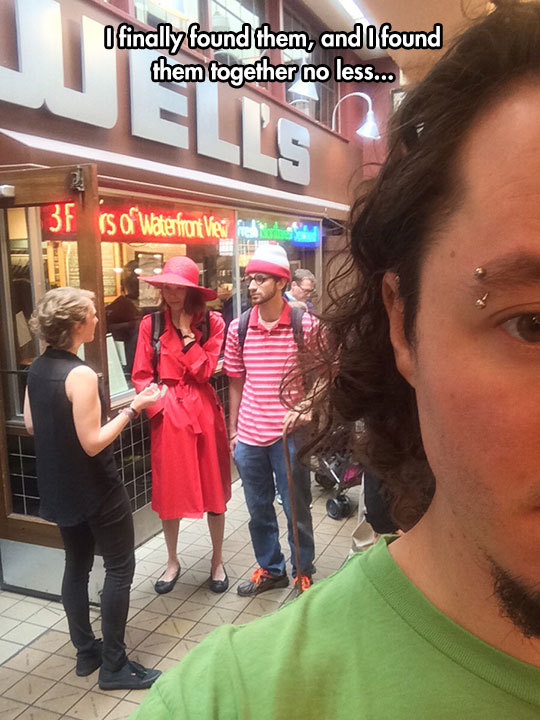
Finally Found These Guys
And people say Shaggy isn’t a good investigator…
 callanswall