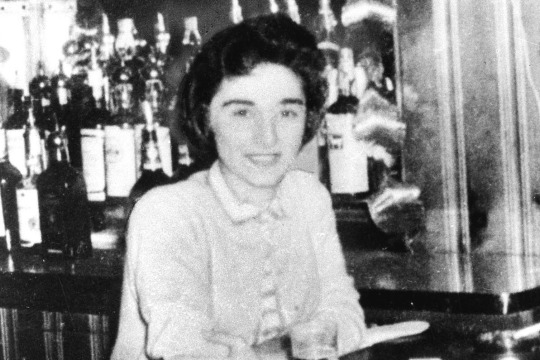
I was told by my professors that Kitty Genovese was a 28-year-old unmarried woman who was attacked, raped, and brutally murdered on her way home from her shift as manager of a bar. I was told that numerous people witnessed the attack and her cries for help but didn’t do anything because they “assumed someone else would”. Nobody intervened until it was too late.
Now… is it likely that people overheard Kitty’s cries for help and ignored them because they thought someone else would deal with it? Or, perhaps, did they ignore her because they knew she was a lesbian and just didn’t care?
Maybe that’s not the case. Maybe it was just a random attack. Maybe her neighbours didn’t know she was gay, or didn’t care.
But it’s a huge chunk of information to leave out about her in a supposedly scientific study of events, since her sexuality made her much more vulnerable to violent crimes than the average person. And it’s a dishonour to her memory.
RIP Kitty Genovese. Society may only remember you for how you died, but I will remember you for who who were.
For the record, the original 1964 “Times story was inaccurate in a number of significant ways.
There were two attacks, not three. Only a handful of people saw the
first clearly and only one saw the second, because it took place
indoors, within the vestibule. The reason there were two attacks was
that Robert Mozer, far from being a “silent witness,” yelled at Moseley
when he heard Genovese’s screams and drove him away. Two people called
the police. When the ambulance arrived at the scene—precisely because
neighbors had called for help—Genovese, still alive, lay in the arms of a
neighbor named Sophia Farrar, who had courageously left her apartment
to go to the crime scene, even though she had no way of knowing that the
murderer had fled.“ [X]
It’s true that there were neighbors who did nothing, but there were those who acted.


 callanswall